What is the purpose of the patient's health record?
 Christopher Pierce
.
Regarding this, what are the four purposes of medical records?
Four Reasons to Document Properly
- Communicates with other health care personnel.
- Reduces risk management exposure.
- Records CMS Hospital Quality Indicators and PQRS Measures.
- Ensures appropriate reimbursement.
Subsequently, question is, what is the purpose of record keeping in nursing? In short, the patient's nursing record provides a correct account of the treatment and care given and allows for good communication between you and your colleagues in the eye care team. Keeping good nursing records also allows us to identify problems that have arisen and the action taken to rectify them.
Similarly, what is the purpose of a medical record quizlet?
Medical records can be used for legal purposes to protect patients and medical professionals. Which of the following is true about medical records? They provide a written account of a patient's health care. A patient, Patrick, claims that he received a treatment from Westerville Medical Center last month.
What are the principles of good record keeping?
Key principles All records must be signed, timed and dated if handwritten. If digital, they must be traceable to the person who provided the care that is being documented. Ensure that you are up to date in the use of electronic systems in your place of work, including security, confidentiality and appropriate usage.
Related Question Answers
What is the importance of documentation?
Documentation help ensure consent and expectations. It helps to tell the narrative for decisions made, and how yourself or the client responded to different situations. In this same manor, it is important to record information that can help support the proper treatment plan and the reasoning for such services.What are the different types of medical records?
Understanding the different types of health information- Electronic health record. Electronic health records, sometimes known as electronic medical records, are electronic systems that store your health records in place of the paper copy, according to Health IT.
- E-prescribing.
- Personal health record.
- Electronic dental records.
- Secure messaging.
What do you mean by documentation?
In computer hardware and software product development, documentation is the information that describes the product to its users. The term is also sometimes used to mean the source information about the product contained in design documents, detailed code comments, white papers, and blackboard session notes.What are the components of a medical record?
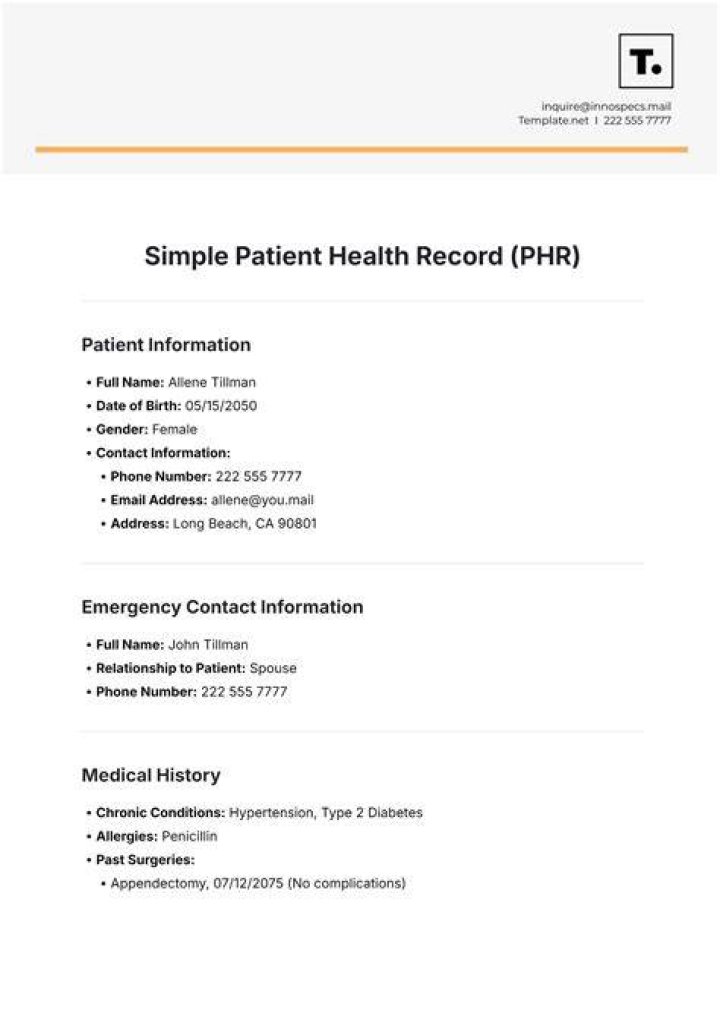
However, some unified components exist in nearly every complete medical records.- Identification Information.
- Patient's Medical History.
- Medication History.
- Family Medical History.
- Treatment History and Medical Directives.
Why is it important to keep accurate records in healthcare?
When caring for a patient, it is important to ensure good record keeping to promote patient care and better communication. Good record keeping is a product of good teamwork and an important tool in developing high-quality healthcare and reinforcing professionalism within nursing.Who generally owns the medical record?
The physical medical record actually belongs to the physician who created it and the facility in which the record was created. The information gathered within the original medical record is owned by the patient. This is why patients are allowed a COPY of their medical record, but not the original document.What is the meaning of medical records?
Medical Definition of medical record: a record of a patient's medical information (as medical history, care or treatments received, test results, diagnoses, and medications taken)What is the primary purpose of patient health information quizlet?
No matter what term is used, however, the primary function of the health record is: To document and support patient care services.Which of the following is the primary function of a health information exchange?
"The primary function of an HIE is to permit access to clinical information on demand at the point of care," according to an American Health Information Management Association report. "A successful HIE depends on trust between the patient, the healthcare provider and the HIE.Which are examples of secondary use of health information?
Health information is also used for secondary purposes such as health system planning, management, quality control, public health monitoring, program evaluation, and research. Sometimes health information will be “de-identified” or “anonymized” before it is used for these secondary purposes.What are the primary uses for the medical record?
The medical record serves as the central repository for planning patient care and documenting communication among patient and health care provider and professionals contributing to the patient's care.What is the primary purpose of Ehrs?
Electronic Health Records ( EHR s) are the first step to transformed health care. The benefits of electronic health records include: Better health care by improving all aspects of patient care, including safety, effectiveness, patient-centeredness, communication, education, timeliness, efficiency, and equity.What is primary data Healthcare?
Primary Data: Data that has been generated by the researcher himself/herself, surveys, interviews, experiments, specially designed for understanding and solving the research problem at hand. Secondary Data: Using existing data generated by large government Institutions, healthcare facilities etc.What is system interoperability?
Interoperability is the ability of different information systems, devices and applications ('systems') to access, exchange, integrate and cooperatively use data in a coordinated manner, within and across organizational, regional and national boundaries, to provide timely and seamless portability of information andWhat are the three main types of records?
Some of the most significant record types are:- Property records - title deeds and settlements.
- Accounting papers - including rentals, vouchers, surveys and valuations.
- Legal papers.
- Inventories.
- Correspondence.
- Enclosure papers.
- Manorial papers - court rolls, custumals, terriers, surveys etc.
- Personal and political papers.