Multivalue answer routing lets you configure Amazon Route 53 to return multiple values, such as IP addresses for your web servers, in response to DNS queries. If a web server becomes unavailable after a resolver caches a response, client software can try another IP address in the response..
Herein, what is Geoproximity routing?
Geolocation routing policy: Route traffic based on the country or continent of your users. Geoproximity routing policy: Route traffic based on the physical distance between the region and your users. Weighted routing policy: Route traffic to resources in proportions that you specify.
what is failover routing? Failover routing lets you route traffic to a resource when the resource is healthy or to a different resource when the first resource is unhealthy. The primary and secondary records can route traffic to anything from an Amazon S3 bucket that is configured as a website to a complex tree of records.
Subsequently, one may also ask, what is weighted routing?
Weighted Routing Policy Weighted routing policy enables Route 53 to route traffic to different resources in specified proportions (weights) for e.g., 75% one server and 25% to the other during a pilot release. Weights can be assigned any number from 0 to 255.
Is Route 53 a load balancer?
Route 53 is a Domain Name System (DNS) service that performs global server load balancing by routing each request to the AWS region closest to the requester's location.
Related Question Answers
Is route53 region specific?
You can run applications in multiple AWS regions and Amazon Route 53, using dozens of edge locations worldwide, will route end users to the AWS region that provides the lowest latency.What are the types of routing policies in route53?
AWS – Route 53 routing policy types - Simple.
- Weighted.
- Latency.
- Failover.
- Geolocation.
How many records of the same name does failover routing allow?
Failover: Failover routing allows you to route traffic to a resource when the resource is healthy and to another resource when the first one is unhealthy. This is mainly used when you have the primary site and a disaster recovery site. Here, the Route 53 you have two records, one for primary and other for secondary.What is geo proximity?
GeoDNS is a powerful set of tools that allow you to segment your traffic based on your users' location or network. You can use GeoDNS to block traffic from reaching your servers, or to optimize user experiences for different locales.How do I set up Amazon Route 53?
To create a hosted zone: Open the Amazon Route 53 console at aws.amazon.com/route53/.
Amazon Route 53 - DNS (Domain Name Server) setup
- Click Hosted Zones in the navigation pane.
- Click Create Hosted Zone.
- In Domain Name, enter domain name.
- Click Create.
What is AWS Route 53?
Amazon Route 53 (Route 53) is a scalable and highly available Domain Name System (DNS) service. Released on December 5, 2010, it is part of Amazon.com's cloud computing platform, Amazon Web Services (AWS). The name is a reference to TCP or UDP port 53, where DNS server requests are addressed.How much does Route 53 cost?
Route 53 PricingDNS zones—$0.50 per hosted DNS zone / month for the first 25 hosted zones, $0.10 for additional zones. Policy records—$50 per DNS name (such as “) Standard queries—$0.4 per million queries for the first billion queries / month, thereafter $0.2 per million queries / month.What is record weighting?
For those unfamiliar, a record weight is a puck-like object designed to be placed on the center of your records during playback. Record clamps are similar, but clamps typically physically clamp (hence the name) onto your turntable's spindle.Does Route 53 work with auto scaling?
Route 53 doesn't offer support for dynamic registration of resource record sets for public or private hosted zones. This can pose challenges when an Auto Scaling event occurs and the instances are not behind a load balancer.Does route53 support MX records?
A scalable Domain Name SystemYes, it supports Name Service records. It supports only MX records.What is netmask ordering?
Netmask ordering uses a setting on the DNS server to determine if the IP Address of the client is in a local or remote network. This can be changed using the command DNSCMD.Why is failover important?
Failover is an important fault tolerance function of mission-critical systems that rely on constant accessibility. Failover automatically and transparently to the user redirects requests from the failed or down system to the backup system that mimics the operations of the primary system.What is the difference between failover and failback?
Failover and failback operations. The failover operation is the process of switching production to a backup facility (normally your recovery site). A failback operation is the process of returning production to its original location after a disaster or a scheduled maintenance period.How does a DNS server work?
It is, in short, a system of matching names with numbers. The DNS concept is like a phone book for the internet. Instead, you just connect through a domain name server, also called a DNS server or name server, which manages a massive database that maps domain names to IP addresses.What is Internet failover?
What is an Internet failover link? A failover link is a secondary Internet link setup to ensure Internet uptime is not lost in the case of a main link failure (e.g. Internet outages caused by traffic accidents, road construction, etc., etc.).What is WAN failover?
WAN Failover. WAN Failover tests your Internet connections, and when one slows or fails, it can reroute network traffic over the remaining connections, maximizing your uptime.What is active active and active passive?
Like the active-active cluster configuration, an active-passive cluster also consists of at least two nodes. However, as the name "active-passive" implies, not all nodes are going to be active. In the case of two nodes, for example, if the first node is already active, the second node must be passive or on standby.What is the underlying hypervisor for ec2?
All PV machines running on a hypervisor are basically modified operating systems like Solaris or various Linux distributions. Amazon EC2 currently utilizes a highly customized version of the Xen hypervisor, taking advantage of paravirtualization (in the case of Linux guests).How are Reserved Instances different from On Demand DB Instances?
The only difference between the two is that a Reserved Instance is one you rent (“reserve”) for a fixed duration, and in return you receive a discount on the base price of an On Demand instance. Standard Reserved Instances lock you into using one instance family, on the same operating system. 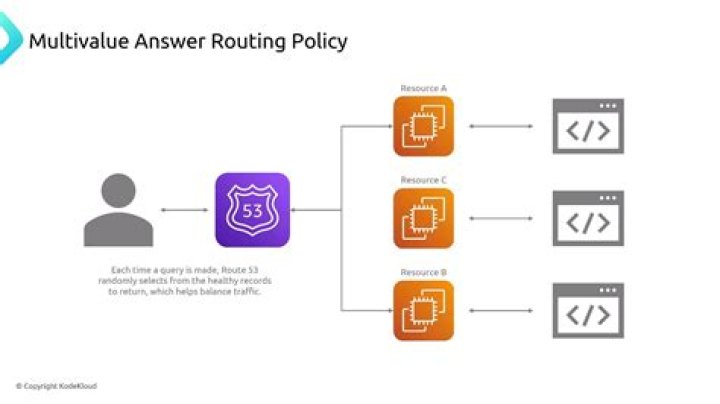
 Robert Clark